
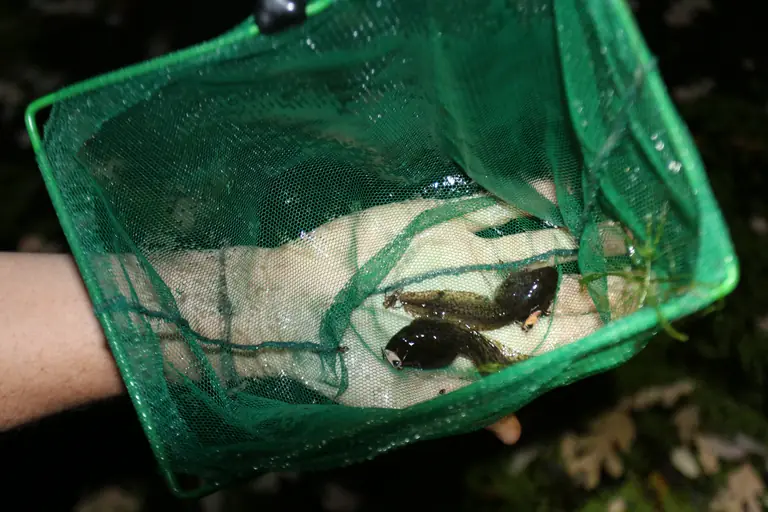
California red-legged frog tadpoles, photographed by Zach Behrens/National Park Service and shared by USFWS Pacific Southwest Region. Source photograph, CC BY 2.0; resized for this page. The photo shows a monitoring project, not my childhood tadpoles.
The pollywogs I brought home
As a kid in Maine, I raised tadpoles almost every spring. I'd collect the eggs, watch them hatch and usually let the tadpoles go.
One summer we stayed at a camp near a pond, and I found toad tadpoles that were about to lose their tails and leave the water. I took them home, raised them the rest of the way and released them.
Watching an animal change so completely can stay with you. Looking back also gives me a reason to ask better questions before repeating an old childhood activity.
Begin at the pond
Visit a legal, accessible spot and watch without collecting. Bring a notebook or take photographs from the bank. Look for differences in size, the appearance of legs, and where the tadpoles gather. Revisit the same place rather than expecting every species to develop on one timetable.
For a Maine pond, begin with Maine's reptiles and amphibians information. Elsewhere, use your wildlife agency's species information and collection rules. A protected species, an uncertain identification, or a site where collecting is prohibited makes this an observation project.
Make the care and release plan first
If you hope to raise tadpoles, ask the local wildlife agency or an amphibian specialist whether it is lawful and appropriate for that species. Establish the destination of the animals before collecting them. Do not move spawn between ponds or assume animals held at home can later be released. Disease, species protection, and local rules all matter.
Froglife's spawn and tadpole guidance explains habitat questions for common frogs and toads in the UK. It is useful background, with regional limits; it does not establish that collecting or release is allowed where you live.
Prepare for the animal it will become
A suitable plan needs the correct enclosure, water source and treatment, water-quality checks, temperature, oxygen, stocking level, and diet for the identified species. Not every tadpole eats the same food. Do not substitute a generic lettuce-and-bucket recipe for that guidance.
As metamorphosis approaches, the animal's needs change. Arrange safe access out of the water before a developing frog or toad needs it, following the specialist's instructions. Keep handling to a minimum. Follow CDC's amphibian hygiene guidance, including washing hands after contact with animals, water, or equipment and keeping their care away from food preparation.
A pond visit has its own lessons
That summer at the camp was also the summer I tripped over a stump at the water's edge and a swarm of hornets came pouring out. My dad's remedy was mud on every sting. I think there were about 30.
Leave the mud remedy in the memory. Current NHS sting advice recommends washing the area and a wrapped cold pack for swelling. Multiple stings warrant prompt medical advice; trouble breathing or swelling of the mouth or throat needs emergency help. Around the pond, wear suitable shoes and supervise children closely.
Return to the same water
Choose a pond you can visit again and put its first observation in a field notebook. A photograph and a date can carry the curiosity home while the animals remain where you found them.
I hope this finds you well,
Scott