
Learning from the people who make it
I especially love iTokri’s Instagram account. It is beautiful to look at, but it is also educational, sharing how fabrics are made and the work behind them. Seeing those processes is part of what has made me want to learn more.
Sanskruti is another great source for finding Indian fabrics. Browse its online fabric shop or follow @sanskruti_store on Instagram for your next fabric discovery.
There are so many names to get to know, and they do not all describe the same thing. Cotton and silk name fibers. Muslin describes a kind of cloth. Ajrakh and Bandhani name particular textile traditions and processes. A fabric can be cotton, handwoven, block-printed, and naturally dyed, but none of those descriptions automatically means the others.
The depth of indigo
Discovering fabric dyed with natural indigo has been especially exciting. I love the depth of that blue. In traditional indigo dyeing, the prepared dye is used in a vat, and the blue develops as the cloth is lifted into the air and the dye oxidizes. For a closer look, Maiwa’s illustrated guide to dyeing with indigo follows the process from preparing the cloth and vat to dipping, oxidation, and washing.

Other natural colors can come from roots, fruit skins, and tannin-rich plants. Traditional recipes vary by place, fiber, and treatment. These are a few ingredients worth recognizing:
- Indian madder and chay roots: sources of reds and pinks, with the shade shaped by the preparation and mordant.
- Pomegranate rind: a source of yellow and mustard tones.
- Turmeric: another traditional source of yellow.
- Myrobalan, often called harda or haritaki: tannin-rich fruit used to prepare cloth for dyeing; it can give the fabric a yellowish cast.
- Iron with plant tannins: a route to dark gray and black. This color depends on the reaction between the ingredients, rather than on a black flower or leaf.
The Met’s accounts of painting with dyes in South Asia and Indian block-printing processes explain these ingredients and the roles of mordants and resists. A mordant helps a dye bind to cloth; a resist protects areas from a dye bath.
Traditional techniques are also practiced with synthetic dyes today. “Indigo blue” may describe a color rather than a plant-derived dye, so look for information about the actual material and maker.
Fabric traditions to get to know
These examples are a starting point for recognizing different ways of making cloth. Historical examples from India and Bangladesh show traditions that cross present-day borders. The photographs are details so you can see the pattern. Each small photograph links to its full source record, and each name links to a fuller explanation.
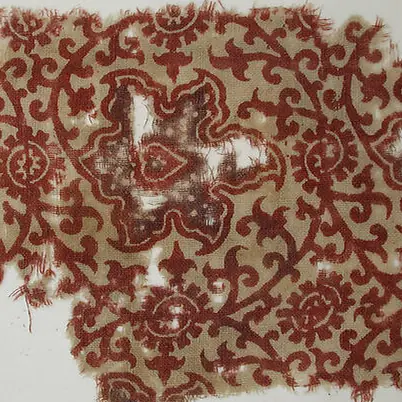
Hand-block-printed cotton
Region: Gujarat and Rajasthan, including the printing centers of Bagru and Sanganer.
Process: Carved wooden blocks place a repeating design onto cloth. Depending on the tradition, the block carries color, a mordant that helps dye bind, or a resist that keeps dye out. Separate blocks can build outlines and color fills.
Look for the rhythm of a repeated block and the separate shapes that build up each motif. Bagru and Sanganeri are distinct traditions within this wider family.

Ajrakh
Region: Kutch in Gujarat and parts of western Rajasthan, with a shared tradition in Sindh, Pakistan.
Process: Khatri printers build the design through carefully aligned blocks, resist and mordant applications, dye baths, and repeated washing. Traditional palettes often bring together indigo blue, red, dark outlines, and undyed areas.
Look at how the borders and repeated geometric or floral units relate to one another. Ask about the actual dyes, since the name alone does not establish them.
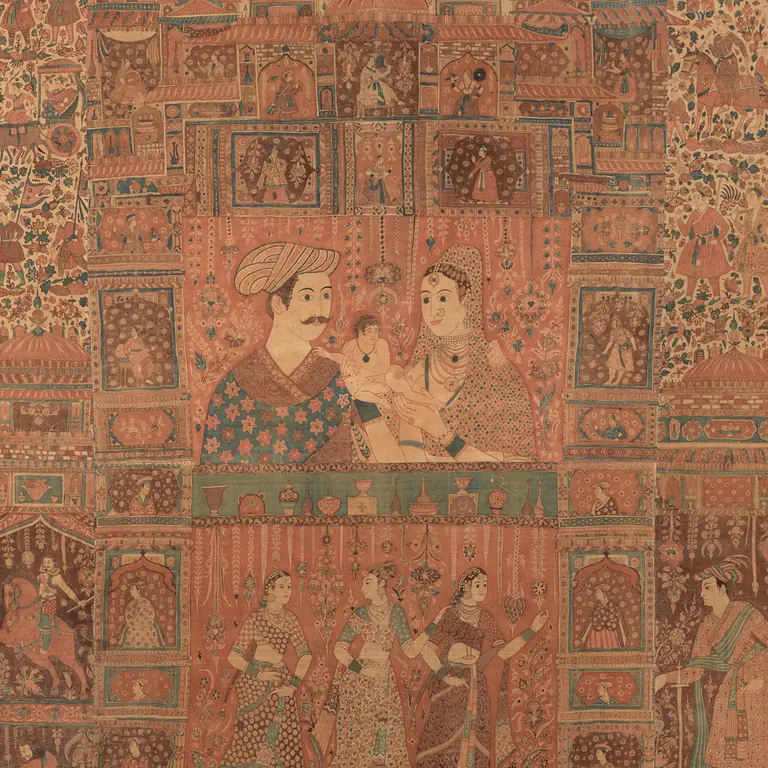
Kalamkari
Region: Andhra Pradesh, especially Srikalahasti and Machilipatnam on the southeastern coast.
Process: In the Srikalahasti tradition, a kalam, or pen, draws designs by hand. The Machilipatnam tradition also uses blocks. Cloth preparation, mordants, painting or printing, dyeing, and washing build the finished textile.
Follow a drawn outline through the composition. Storytelling figures, flowers, and scrolling plants can all have a place in Kalamkari.
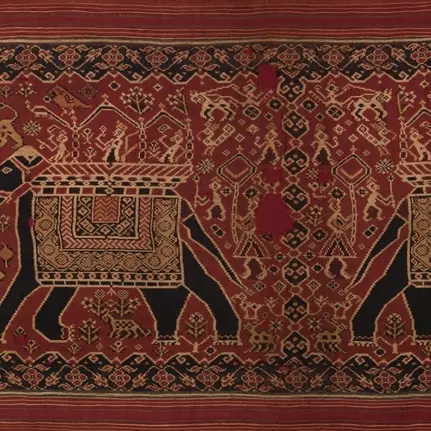
Ikat, including Patola
Region: Several centers, including Odisha, Pochampally in Telangana, and Patan in Gujarat.
Process: Sections of yarn are bound to resist dye before weaving. The design emerges as the dyed threads meet on the loom. Single ikat patterns either warp or weft; double ikat patterns both. Patan Patola is a silk double-ikat tradition.
Look for pattern built into the threads rather than printed onto finished cloth. Soft edges are common, though accomplished double ikat can be remarkably precise.

Bandhani
Region: Gujarat and Rajasthan, including Kutch and Jamnagar, among other centers.
Process: Tiny points of cloth are gathered and tightly tied before dyeing. The bindings resist the dye, leaving rings or dots when opened. Repeated tying and dyeing can create several colors in the same piece.
Look at how clusters of light dots form larger shapes. The tiny tied points of the cloth build the design.
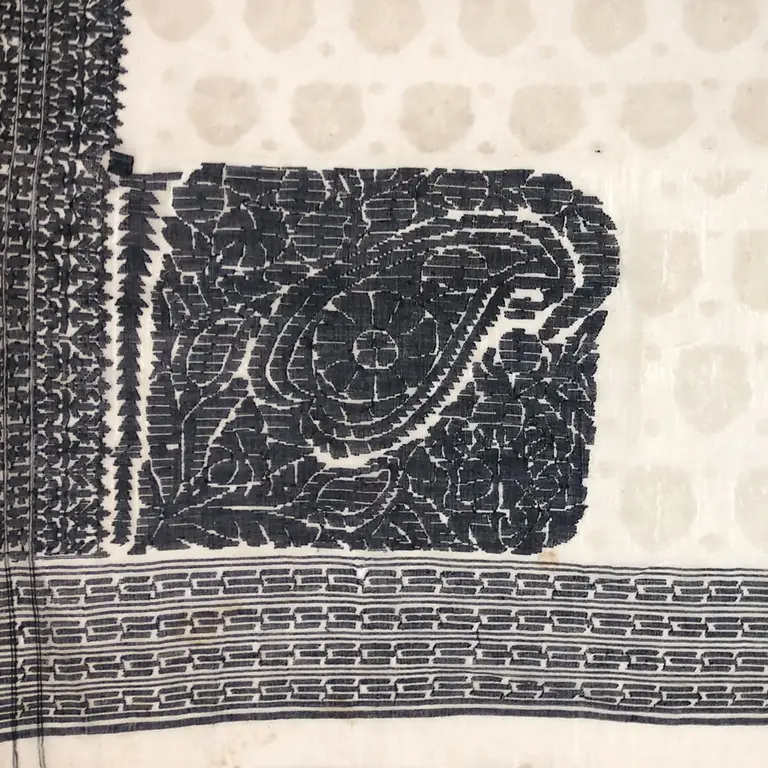
Jamdani
Region: The Bengal region, historically centered around Dhaka in present-day Bangladesh, with continuing traditions in West Bengal, India.
Process: The weaver adds supplementary weft threads by hand while making the ground cloth. These extra threads form floral or geometric motifs within the weave, rather than being stitched onto finished fabric.
Fine cotton versions can feel airy and translucent. Notice how the denser motifs stand against the lighter ground cloth.
Choosing what to make
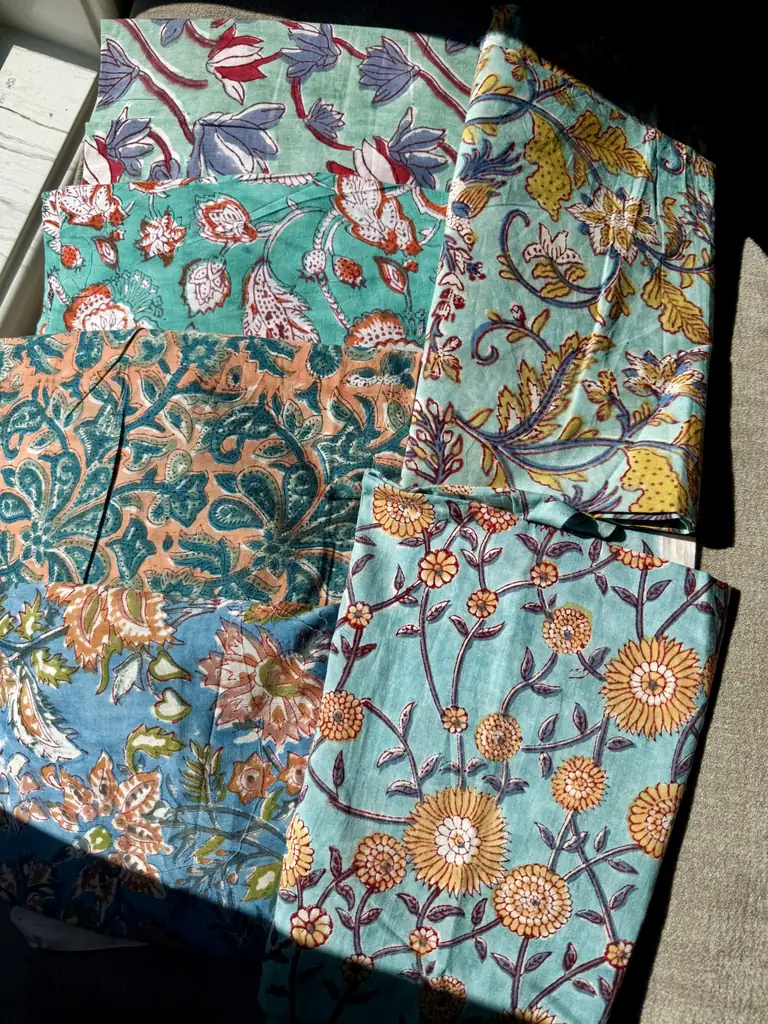
The fabrics I have feel lighter than the cotton quilting fabric I am used to. I can imagine a scarf, a soft lining, a patchwork panel, a drawstring project bag, or a cushion cover backed with a sturdier cloth. There are so many directions I would like to try.

Match the cloth to the job before cutting. A sheer or loosely woven fabric may need a lining, and a bag that will carry weight needs suitable supporting fabric and reinforced handles. For a first attempt, use a pattern written for a similar fabric weight rather than assuming any printed cotton will behave like quilting cotton.
Follow the maker’s washing directions and test an offcut before combining it with a pale lining or another fabric. Allow for shrinkage and check for color transfer. Keep a label or note with each piece so its fiber, maker, origin, and care instructions stay with it after the packaging is gone.
Where to start
Watch a making process on iTokri’s account, then look at a fabric you already have. Is its pattern printed, painted, tied into the cloth, or woven into the threads? Choose one technique to learn about before choosing a project. If a bag appeals, the useful tote guide can help you think about fabric weight and construction. Or keep a few scraps as a color study while you decide what you want to make.
I am still at the beginning of learning about these fabrics, and that is part of the pleasure. I am excited to work with them.
I hope this finds you well,
Scott