Make a record before you change anything
Choose one manageable area. Photograph it from a spot you can find again, then note the date, what grows there, and when the light reaches it. A rough sketch is enough. Include practical details you might otherwise forget: how quickly the soil dries, where water pools, and whether a vine has room to climb. The Oregon State University Extension nature-journaling guide suggests recording a date, location, observations, and questions. You can do that on one piece of paper.
Try one change you can recognize later
Move a container, give a climbing plant a support, adjust your watering routine, or choose one plant suited to the available light. Change only one or two things at a time so you can see what followed. If you are unsure about a plant or a problem, find your local university extension service through the Extension Master Gardener directory. Local growing advice matters more than a universal calendar.
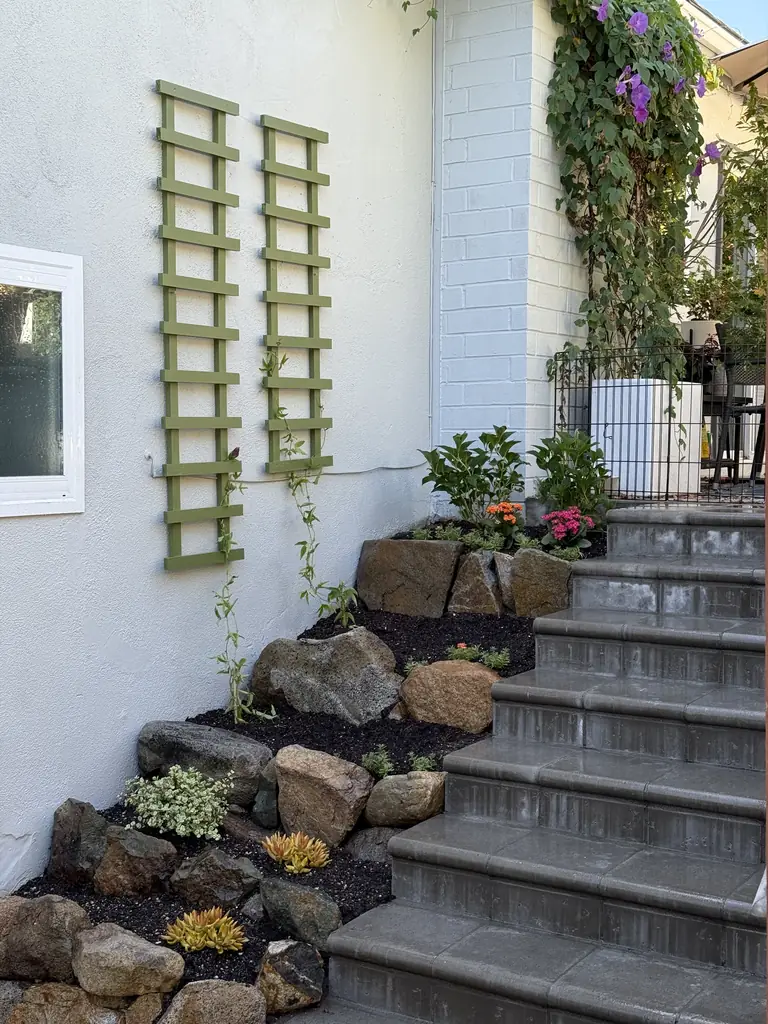
The photographed trellises are a reminder that a garden can be built in stages. They show a place to start, not a promise about how quickly a vine will fill the wall.
Return to the same view
Once a week, stand where you took the first photograph. Note what grew, what struggled, and what surprised you. Take another photo every few weeks rather than trying to document every day. If a plant does poorly, write down the conditions before replacing it. Shade, heat, drainage, and a crowded root space are clues to investigate, not verdicts on your ability.
Choose the next small test
At the end of a month, compare the two pictures and your notes. Keep what is working. If a change did not help, return to the earlier setup or try a different approach. A container on a balcony or a plant by a window works just as well for this exercise; the useful part is noticing what actually happens.
Where to start
If you have not chosen a space yet, begin with one small garden corner. Use a field notebook for observations you want to revisit, and keep the first experiment modest enough to change your mind.
I hope this finds you well,
Scott