


A natural history book asks you to slow down at a different point on each page. One artist puts several flowers side by side for comparison; another shows the insect that lives among them. These five photographed pages come from books you can open online for free. Their names and classifications belong to their time, but their attention to shape, color, and change still has something to teach a curious eye.
Gerard’s herbal: look at the differences
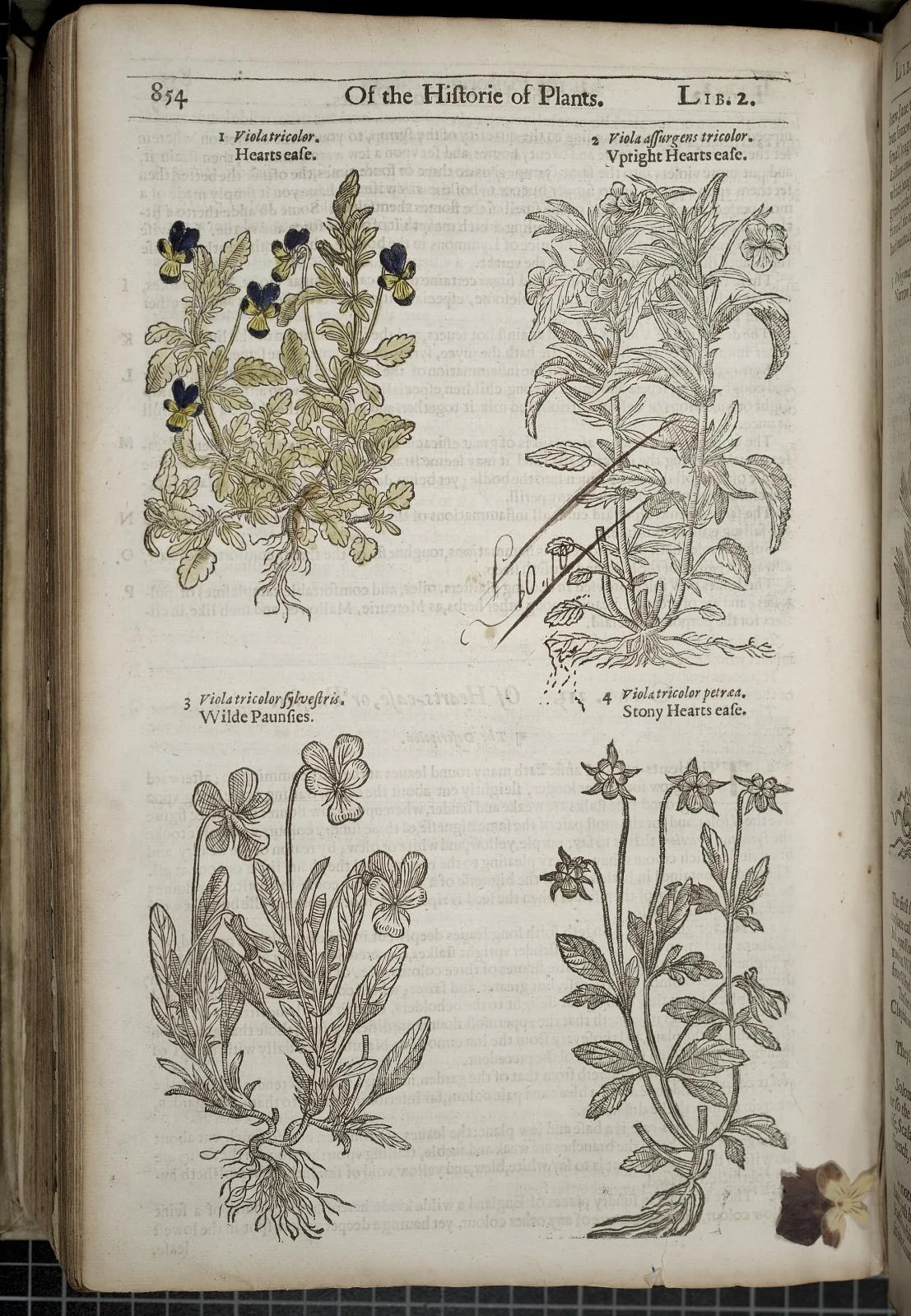
In this 1636 edition of John Gerard’s Herball, four kinds of heart’s-ease and pansy occupy one page. The roots, leaf shapes, and small flowers are all visible, with names set beside them. It is a page made for comparison: look at one drawing, then move your eye to the next. The old names are part of the book’s history, so use a current field guide if you want to identify a plant outdoors. Open the digitized herbal ↗
Merian’s Suriname: notice what changes
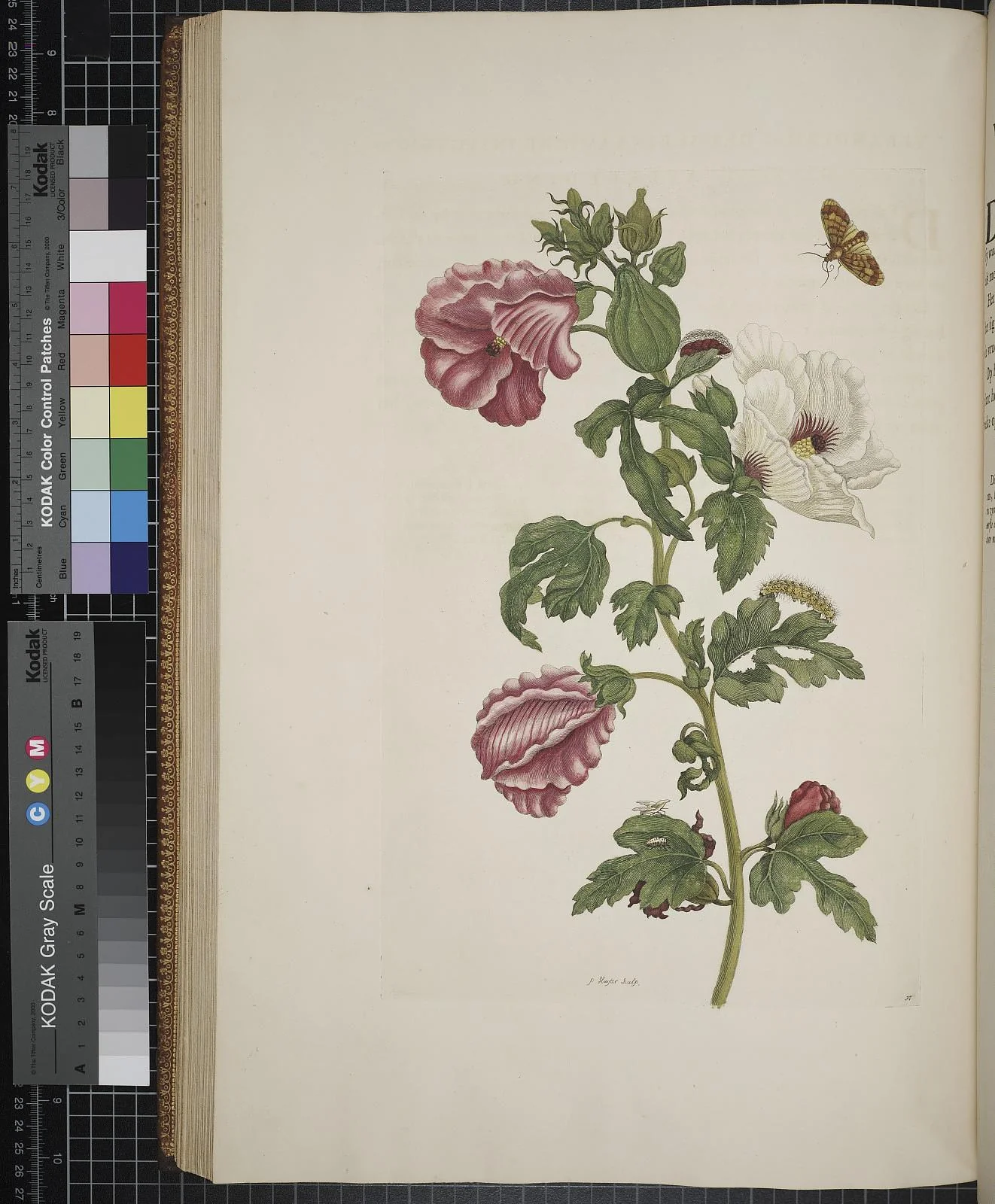
Maria Sibylla Merian’s Metamorphosis insectorum surinamensium was published in 1705. Here, a flowering stem shares the page with a caterpillar and a moth. The plant is more than a decorative background: Merian was documenting insects through their changing lives and placing them with the plants where she found them. Follow the stem from bud to bloom, then find the small animal forms. Turn the pages of Merian’s book ↗
Catesby’s natural history: see two subjects together
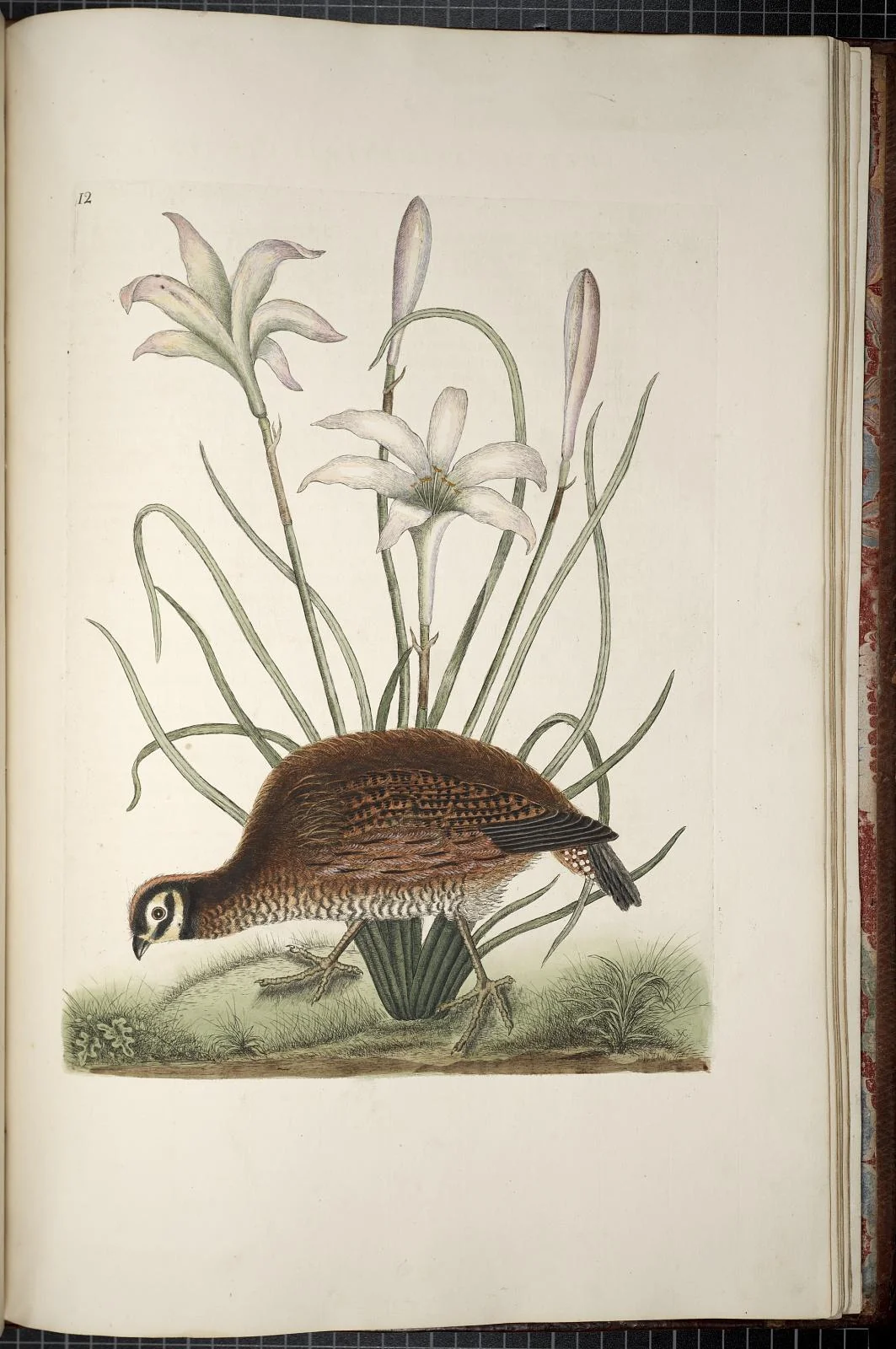
Mark Catesby placed an “American Partridge,” now called a northern bobwhite, in front of an Attamusco lily in a plate cataloged from his 1729 Natural History of Carolina, Florida and the Bahama Islands. The bird leans into the foreground while the lily rises behind it. Spend a minute on the bird’s feather pattern, then on the fine lines of the petals. Putting both on one sheet gives your eye a place to move. Explore Catesby’s digitized volume ↗
Curtis’s magazine: let one flower fill the page
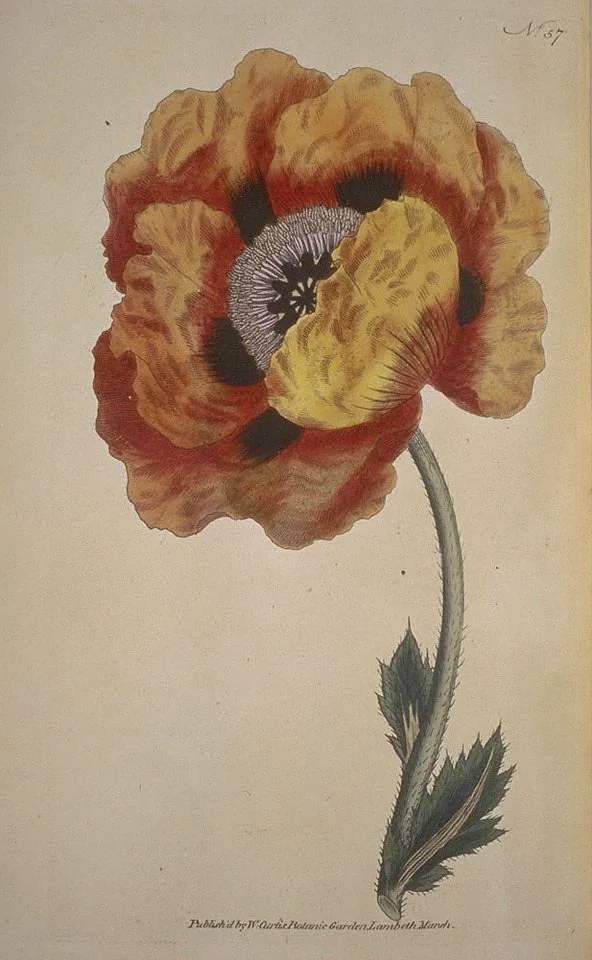
A poppy from an 1801 volume of Curtis’s Botanical Magazine nearly fills its sheet. Its warm petals gather around a dark center; the stem and leaves carry the eye downward. This plate is a reminder that close looking can begin with something ordinary and familiar. If you have a flower or a fallen leaf nearby, try sketching only the part that first catches you. Browse this volume of the magazine ↗
Haeckel’s art forms: compare a repeated shape
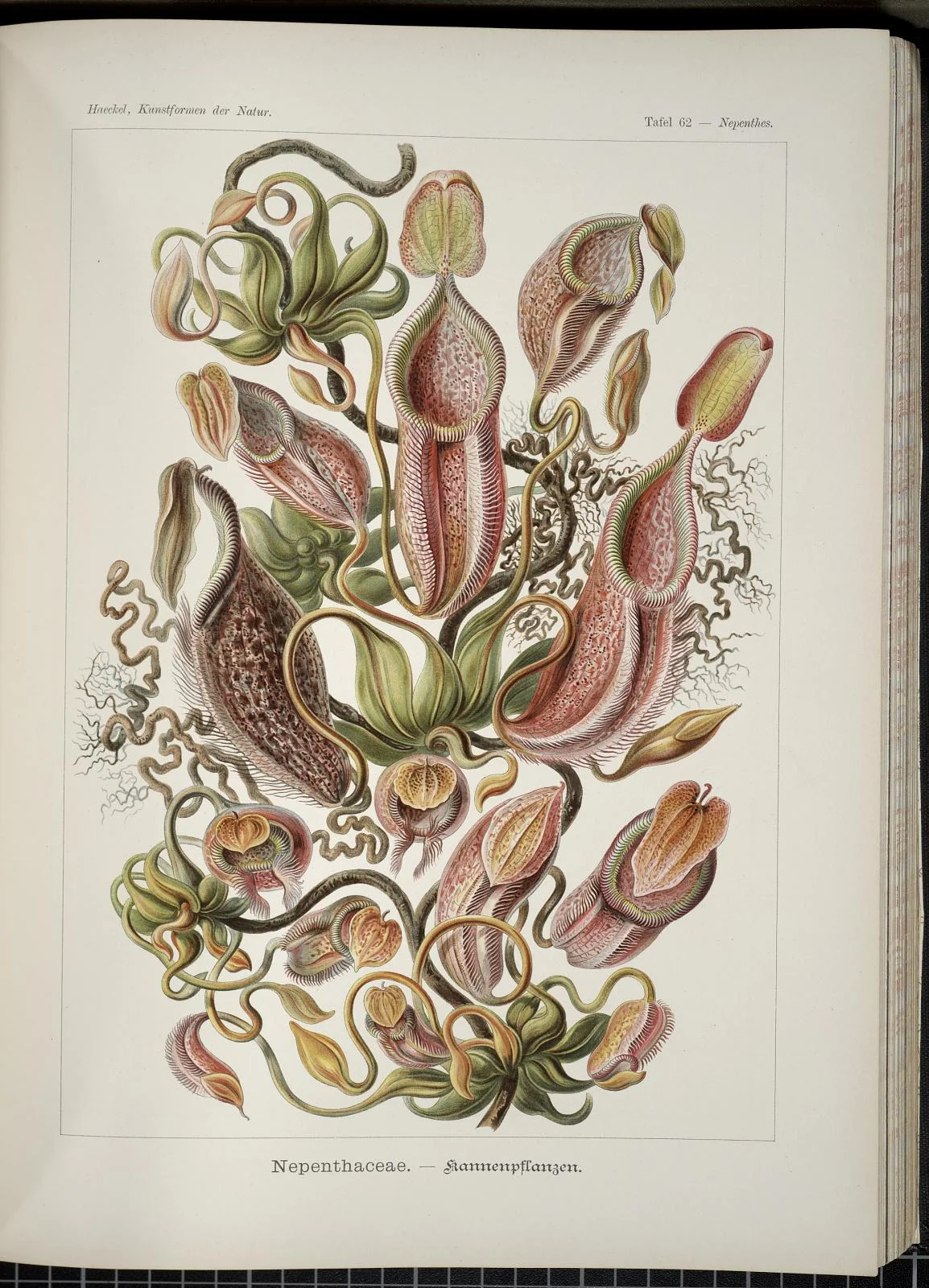
Ernst Haeckel’s Kunstformen der Natur, published beginning in 1899, arranges many pitcher plants in one elaborate plate. The pitchers bend, flare, narrow, and open in different ways. Rather than trying to take in the whole composition at once, choose two and compare their rims. The page feels ornate, but that small exercise brings it back to observation. Open Haeckel’s digitized book ↗
Make a page of your own
Open one of the books and give a plate five unhurried minutes. Write down three things its artist chose to show: perhaps the root, a life stage, or a change in shape. Then choose something near you: a houseplant, a garden weed, a shell, or a feather. Make your own small record. A pencil outline and a few words are enough. Add where and when you saw it; those details are yours to keep.
You can carry the practice outside with a field notebook, or begin on a blank page with a sketchbook and a few pens. Use a current guide for identification or safety decisions; these old volumes are best opened as records of how people once looked.
Where these pages came from
Each image opens its original record at the Smithsonian Libraries and Archives. The full volumes are available through the Biodiversity Heritage Library or the Smithsonian digital library. Open a book and keep turning pages beyond the five shown here.
I hope this finds you well,
Scott