

Choose a shore with an easy return
Pick one beach, bay, or lakeshore you can reach without a complicated day. Read the managing park’s current page for access, facilities, closures, and parking. Choose a short route with a clear way back, especially when daylight is limited. A bench, overlook, or paved path can serve the same outing when walking on pebbles or sand is difficult.
Check the water and the weather
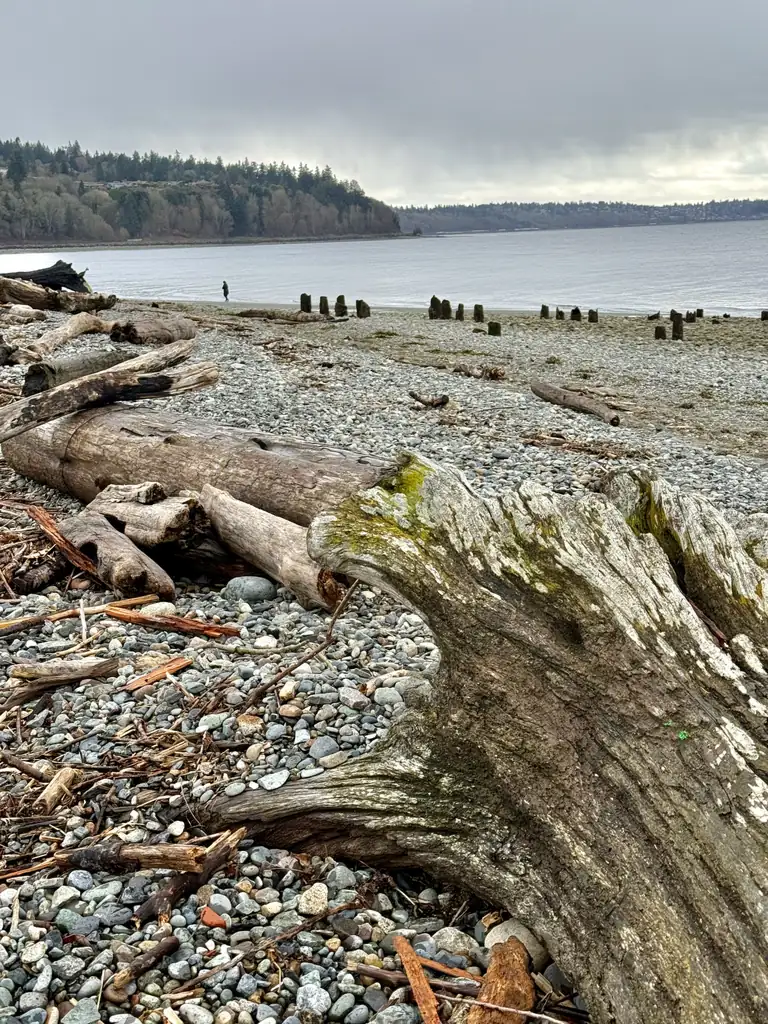
At an ocean shore, look at current weather and surf alerts before leaving. If the tide affects your route, use NOAA tide predictions for a nearby station, then leave generous room for local conditions. The National Weather Service warns that waves can suddenly run far up a beach and move heavy logs. Stay clear of the surf line and driftwood within its reach. The photograph shows driftwood on a pebbled shore; it is a view to notice, not a place to sit during active surf.
Follow one detail
Walk slowly enough to see the difference between pale, newly exposed wood and older pieces darkened by water. Notice the line of stones left by a recent tide, or how a cloudy sky softens the colors across the water. Pick one detail to photograph or describe in a sentence. Leave shells, plants, and wildlife in place where park rules require it.
Make the return part of the plan
Bring a warm layer and a dry place for your phone or notebook. Set a time to turn back before you are cold or the light fades. A warm drink afterward can be a stop, but the walk does not need an extra destination to count.
Bring a detail home
Put your photograph beside a page in a field notebook, or use the shoreline colors for a simple color study. For a visit organized around a particular low tide, use the low tide guide.
I hope this finds you well,
Scott