


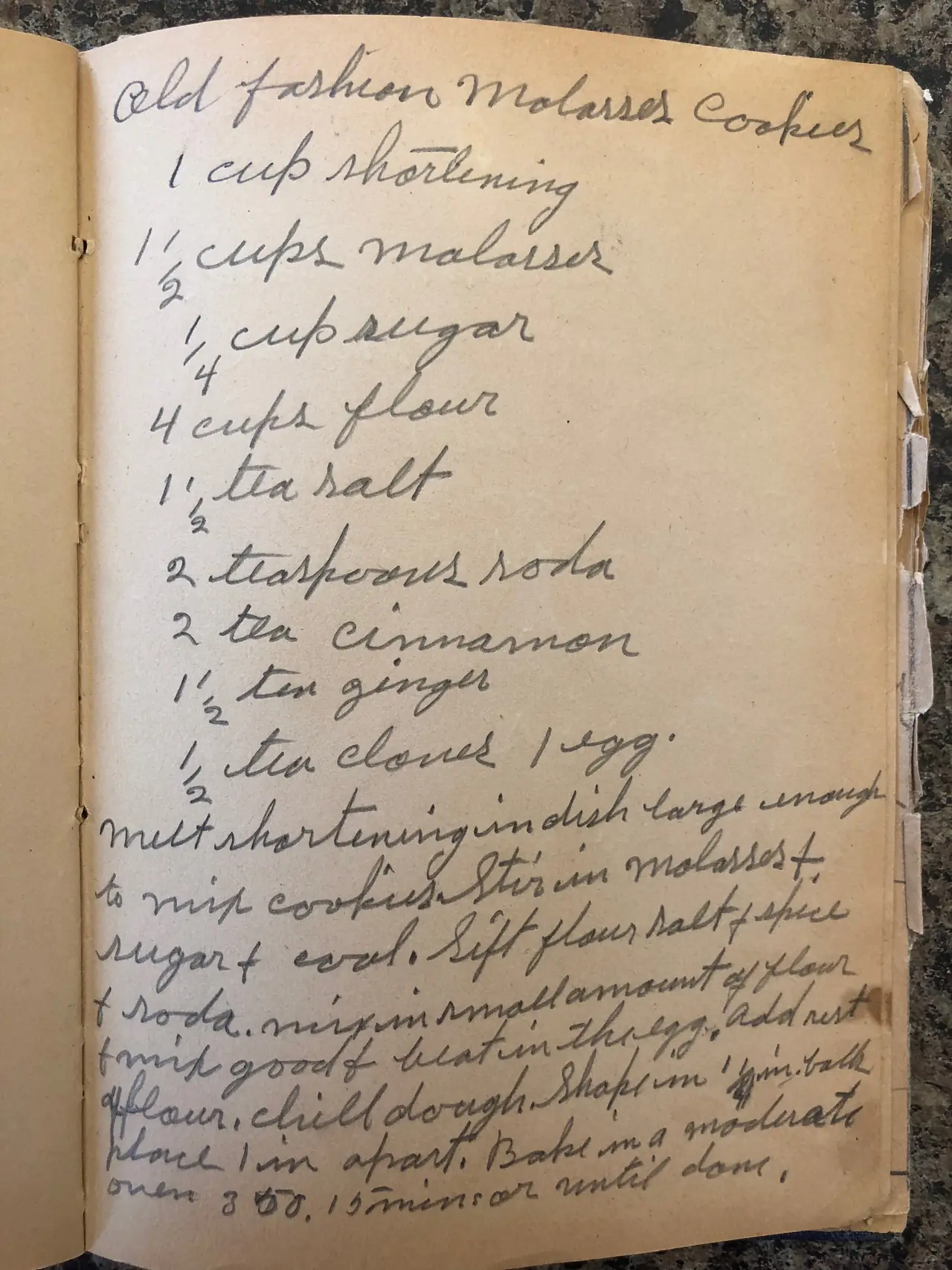
The page in this photograph comes from Scott’s grandmother’s molasses cookie recipe. It is headed “Old Fashion Molasses Cookies” and names shortening, molasses, sugar, flour, salt, baking soda, cinnamon, ginger, cloves, and an egg. It also calls for chilling the dough, rolling it in sugar, and baking it at 350°F. A handwritten page like this invites a little detective work before the oven goes on.
Read the whole page first
Copy the ingredients and steps onto a separate sheet, keeping the original nearby. Read every fraction twice. An old recipe may assume you already know the size of the pan, how long to chill the dough, or what a finished cookie should feel like. Mark those gaps rather than quietly filling them in. If someone in your family remembers making it, ask what they noticed. If not, compare a tested molasses cookie recipe for a sense of dough texture and doneness, while keeping the old recipe’s ingredients distinct.
Let one cookie go first
Make the dough according to the page as carefully as you can. Measure flour consistently; King Arthur’s flour-measuring guide shows how to spoon and level it when you do not have a scale. If the instructions leave room for interpretation, bake one test cookie before filling a tray. Note how far it spreads, how long it takes, and whether you like the texture after it cools. Adjust the size or timing for the rest of the batch, and write down what you changed.
Keep the useful details
Add a dated note beside your copy: the molasses you used, the size of each dough ball, the time in your oven, and what you would do again. The note does not have to make the recipe perfect. It makes the next attempt easier for you or for someone else. Take a photograph of the original page too, so its handwriting remains with the practical version.
If you do not have a family recipe
Ask a friend to share one they make, borrow a community cookbook from the library, or choose a tested recipe to try. The exercise is the same: make it once, notice what happens, and leave a useful note for the next cook. If baking turns into something you want to repeat, try one loaf a week.
I hope this finds you well,
Scott