
The fire had to burn for hours
When I was a kid in Springfield, Maine, the end of winter meant maple syrup season. We tapped our own trees and boiled the sap in the back yard. The fire had to burn for hours, and it was some of the most fun I had growing up.
You do not need a sugar shack to become interested. You do need to look at the whole process before drilling a tree. Collecting sap is the beginning; storing it and tending the heat are the larger commitment.
Meet the tree before the season
Identify your maples while they still have leaves, and ask the landowner before tapping. Sugar maples are familiar syrup trees, but other maples can be used. Sap sweetness varies, so a different tree may mean a longer boil.
Freezing nights followed by above-freezing days help the sap run. The calendar depends on your region and the weather. Read University of Maine Extension's backyard maple guide before buying equipment; it covers tree selection, tapping, collection, and finishing.
Plan a modest first season
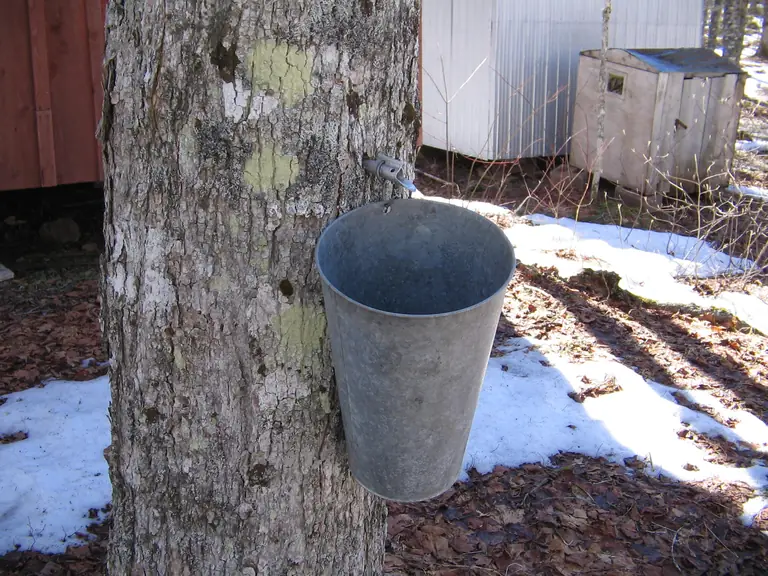
Choose a healthy tree at least 10 inches in diameter, measured about 4½ feet above ground. A single tap is a manageable place to begin. The Maine guide specifies a level, horizontal hole for a 5/16-inch tap, about 1½ to 2 inches deep. Keep away from old tap holes and follow the guide's placement instructions.
Gather a matching drill bit and spile, lidded food-grade containers, a wide boiling pan, a thermometer, syrup filters, and suitable containers for the finished syrup. Browse Maine Extension's maple resources for equipment guidance. Arrange the outdoor heat source on a stable surface, follow local fire rules, and keep children away from hot sap and steam.
Give the boil an afternoon
Keep collected sap cold, process it promptly, and discard sap that has become cloudy or sour. It can take roughly 40 gallons of sap to make a gallon of syrup, with considerable variation. Boil outdoors rather than filling the house with steam, and never leave the pan unattended or let it boil dry.
As the sap concentrates, the work becomes more watchful. Keep a note of the trees, the collection dates, and the amount gathered. A first season can be useful even when the final jar is modest.
Finish with a measured method
Finished syrup boils about 7°F above the boiling point of water at your location, but density matters too. Follow the Maine guide's thermometer and syrup-hydrometer instructions, filtering method, and hot-packing directions. Do not guess at a shelf-stable finish from color or thickness alone. Refrigerate opened syrup and discard syrup with mold.
When buds begin to swell and the season ends, remove the taps. Leave the holes to close naturally.
Begin with the tree
Find a maple you have permission to tap and work through the complete method before the season arrives. If you enjoy keeping a record, a field notebook gives the project a place to continue. The first time you pour syrup you made yourself over pancakes, you may understand why we kept that fire going all day.
I hope this finds you well,
Scott