

The truck that kept driving pipe
I grew up on well water. I still remember the day a big truck pulled up to our house and kept driving pipe deeper and deeper into the ground.
I also remember the school fluoride program. Every kid chewed a tablet, swished a solution around, spit it into a little foil-lined packet and handed it to the teacher. My mom took a very natural, homeopathic approach to most things, and she didn't want us doing it. But I sat at my desk and watched everyone else do it, and I felt singled out, which happened a lot in my childhood.
What none of us knew was what was actually in our water. That's the part worth fixing.
If your family remembers someone choosing a well site with a forked branch, the history of water dowsing follows that continuing New England tradition and the evidence behind it.
Find out what your household uses
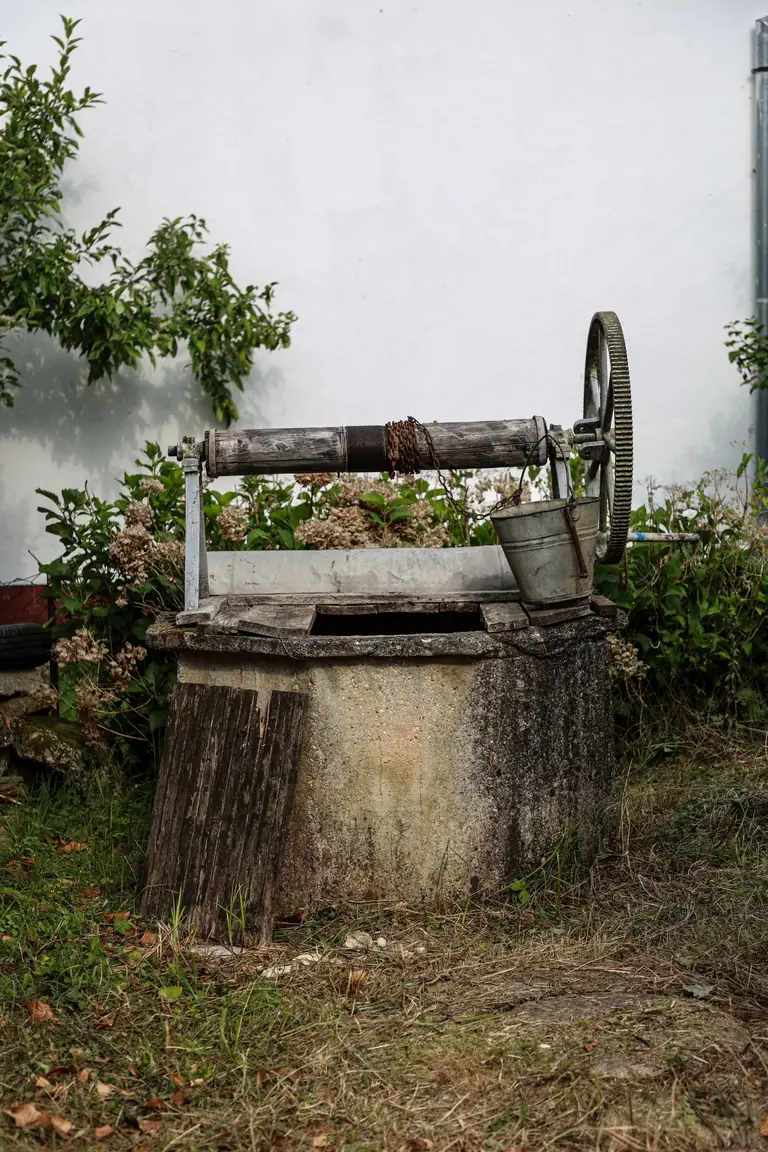
Locate the well record, any treatment equipment, and the most recent laboratory report. If you have just moved in, ask for the actual results and dates rather than a general assurance that the water has always been good. The old well pictured here is atmosphere; a modern drilled well may have only a capped pipe visible above ground.
Start a folder for the well's location, construction record, service history, tests, and treatment instructions. It is a household record you can return to, rather than a detail you have to remember.
Ask a certified lab what to test
CDC's well-water testing guidance recommends annual testing for total coliform bacteria, nitrates, total dissolved solids, and pH. Additional tests depend on local conditions. Ask your health department about concerns such as arsenic, lead, pesticides, or nearby fuel and industrial activity rather than choosing a panel from taste alone.
Use EPA's state laboratory contacts to find your state's drinking-water laboratory certification program. Tell the lab that you use a private well, describe any treatment system, and explain why you are testing. Ask what the panel covers, what it costs, and whether you need separate untreated and treated samples.
Collect the sample their way
Use the laboratory's bottles and follow its directions for the tap, preparation, collection, storage, and delivery deadline. Do not rinse a prepared sample bottle or substitute a kitchen jar. Arrange collection around the lab's receiving hours so the sample can arrive in time.
Keep the report, including the units, laboratory interpretation, and sampling location. If a result needs attention, speak with the health department and an appropriate well or treatment professional before choosing equipment. A filter has to address the identified problem.
Know when to test again
Beyond the annual schedule, contact your health department after flooding, well repairs, a change in taste or appearance, or a local contamination alert. Ask about testing when a pregnancy or a new child changes the household's needs. An annual result cannot describe every day that follows it.
If contamination is suspected or confirmed, use a known safe alternative water supply while getting advice. Boiling does not remove chemical contaminants. EPA's private-well protection information is a starting point for looking after the well and identifying nearby risks.
Begin with the last report
Find its date and call a certified lab if the next test is due. If your question concerns fluoride, bring the measured level and your household's circumstances to a dentist or health professional. You can make a more informed decision with a result in front of you.
I hope this finds you well,
Scott