
Meet the people who keep bees near you
Find a local beekeeping group or a beginner course before choosing equipment. Ask what hive care looks like through a whole year in your climate, not only during the first warm weeks. In Washington, the Washington State Beekeepers Association lists local organizations, and its beginning course description covers biology, equipment, and first-year hive management. Elsewhere, a university extension office or state association can point you toward a local course.
Learn the obligations before buying the box
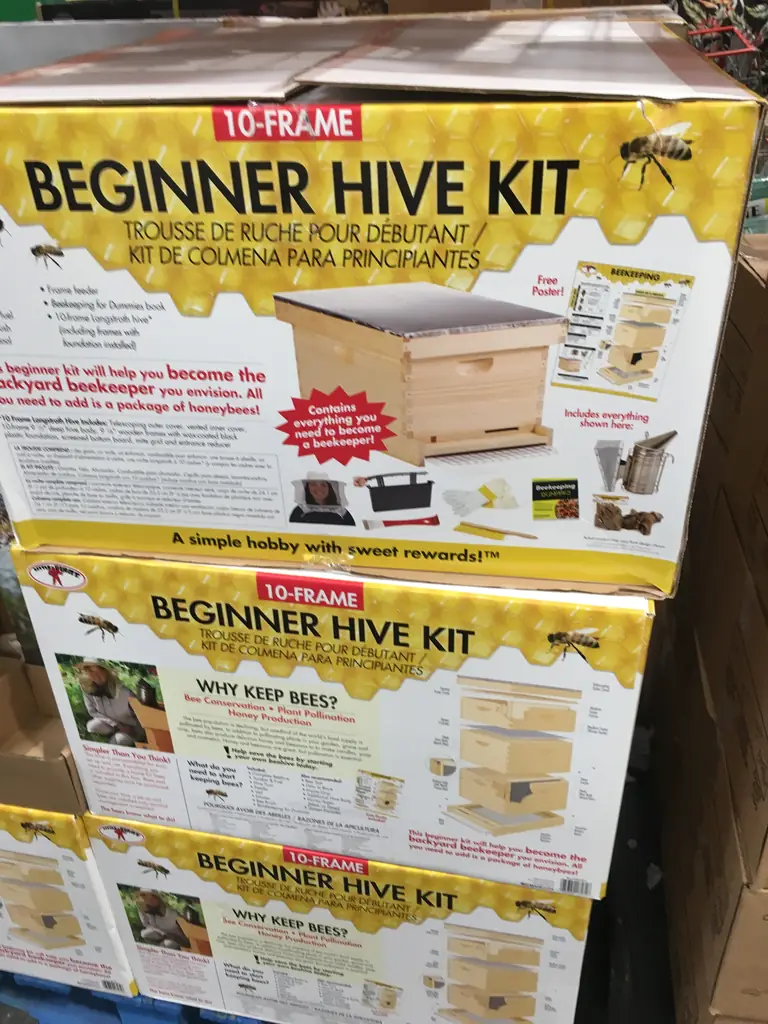
Ask an experienced keeper about protective clothing, regular inspections, disease and mite management, water, neighbors, and what happens when you travel. Request a realistic estimate for the first year and the years after it. A course or club meeting can help you decide whether the time and responsibility fit your life. The kits in the photograph are boxed equipment at a store; the image does not show an active hive.
Check the rules for your address
Rules can differ by state, city, neighborhood, or property. For Washington readers, the Washington State Department of Agriculture’s apiary page is the starting point for registration and state requirements. Also check the local government and any property rules that apply to you. Do this before ordering bees or placing equipment.
Choose a first step that does not require a colony
You might attend one meeting, visit a teaching apiary when a group offers a supervised visit, or plant flowers suited to your region for a variety of pollinators. Beekeeping can remain an interest you learn about without becoming an obligation you take home.
Where to start
Write down three questions for a local beekeeper: what is the busiest month, what care cannot be skipped, and what would you buy differently if beginning again? For another living project with daily responsibility, read a small tank, set up slowly.
I hope this finds you well,
Scott