
A coffee can in my mom's garden
One of my summer jobs as a kid was picking potato bugs off the plants in my mom's garden. I'd drop them into a coffee can, and I squished their bright orange eggs on the undersides of the leaves.
We poured gasoline in the can to finish them off. Please don't do that part. A bucket of soapy water works for collecting the beetles. Leave fuel out of the garden job.
Be sure which insect you have
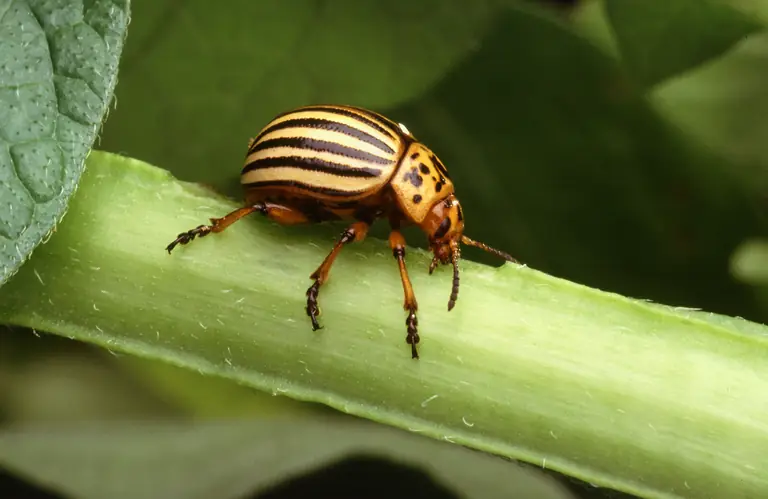
“Potato bug” is a common name used for different animals. This guide concerns the Colorado potato beetle pictured above. Adults have yellow-and-black striped wing covers. Their larvae are reddish with dark heads and dark spots along their sides; the yellow-orange eggs sit in clusters beneath leaves. Compare what you see with the Colorado potato beetle identification page before removing it.
Take a clear photograph if you are unsure. A local extension office can help with identification, including insects that resemble pests at a glance. A leaf with holes is a reason to investigate rather than remove every visitor.
Make a careful pass through the plants
Use Minnesota Extension's Colorado potato beetle guide for the full method and local context. Its physical controls include picking adults and larvae into soapy water and crushing egg clusters.
- Bring a container. Set out a bucket of soapy water and gloves if you prefer them. Keep the bucket beside you as you work.
- Look from both sides. Check the tops of the plants, then turn leaves gently to inspect their undersides. Work along the row so you know what you have covered.
- Remove confirmed beetles. Pick adults and larvae into the bucket. Crush positively identified egg clusters on the leaf, taking care with the plant.
- Return regularly. Check again as the season progresses. Catching an early group is useful, but a single pass will not settle the job.
Give yourself a way to notice change
Mark the date and where you found the most beetles. A sketch of the bed can be more useful than trying to remember which end was affected. If damage continues or becomes extensive, ask your local extension service about the next appropriate step.
Crop rotation and row covers may help in the right circumstances, but they need planning. Beetles can move between beds, and a cover over an already infested patch is no solution. Read the extension guide before arranging either.
Keep the job a size you can repeat
Handpicking suits a manageable planting. If you have more plants than you can inspect, adjust the plan before the next growing season. With someone else, take opposite ends of the row and compare what you found; alone, a single careful circuit gives the task a clear finish.
Begin beneath a leaf
Identify one insect before reaching for a treatment. Keep a picture or a note in your garden log, and return to the same plants. The habit is simple, even when the garden keeps giving you something new to learn.
I hope this finds you well,
Scott